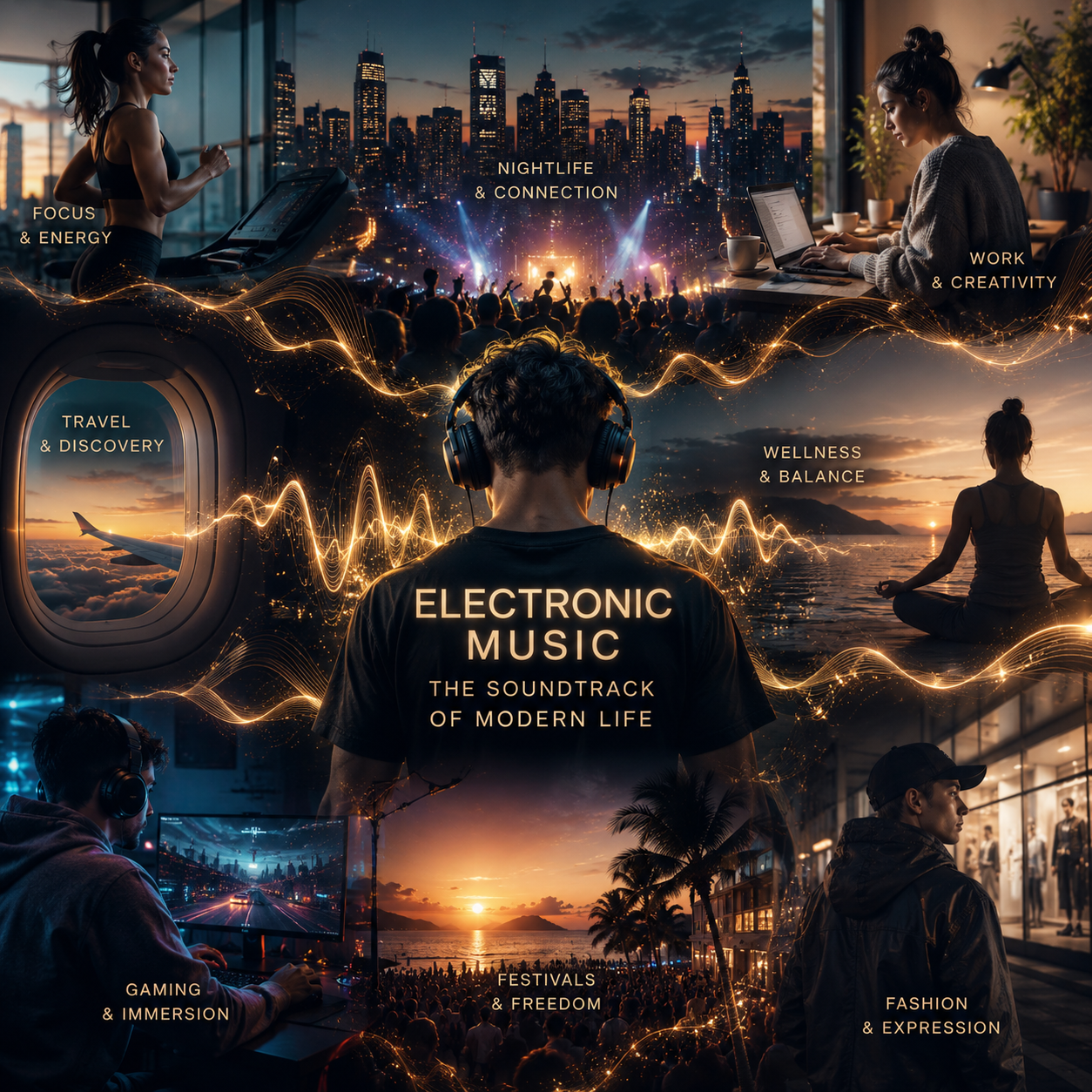
Electronic music is no longer only the sound of clubs, festivals or late-night dancefloors. Over the years, it has quietly moved into almost every part of modern life. It is in workout playlists, fashion videos, travel edits, gaming soundtracks, wellness sessions, advertising, social media clips, beach bars, hotel lounges and personal headphones during everyday routines.
That is why electronic music has become much more than a genre. It has become a language of modern culture. Its rhythms help people move. Its textures help people focus. Its atmospheres help people escape. Its melodies help people remember. From deep house and melodic techno to ambient electronic sounds and pop-inspired productions, electronic music now shapes how many people experience mood, space and identity.
This evolution is important because it shows how electronic music moved beyond one specific scene. It still belongs to the club, but it also belongs to daily life. It has become a soundtrack for motion, emotion, creativity and connection.
Electronic music moved beyond the dancefloor
For many people, electronic music still begins with the club. The kick drum, the bassline, the lights, the crowd and the physical energy remain central to the culture. But the reach of electronic music has expanded far beyond that environment.
Today, listeners often discover electronic sounds through playlists, short videos, background music, cinematic edits, gaming, fashion content or travel reels before they ever hear them in a club. A melodic house track might become the soundtrack to a sunset video. A deep electronic groove might be used in a luxury brand campaign. A soft ambient piece might help someone focus while working.
This does not reduce the value of club culture. It actually shows how powerful the electronic language has become. The same elements that work on the dancefloor — rhythm, repetition, tension, release and atmosphere — also work in everyday life because they match the way modern people move through time, screens and emotions.
A music style built for movement
Modern life is constantly in motion. People commute, travel, train, work, scroll, create, share and switch between different moods throughout the day. Electronic music fits naturally into that rhythm because it is built on motion.
A house groove can make walking through a city feel more cinematic. A melodic techno track can turn a night drive into a personal movie. A deep house playlist can bring warmth to a work session. Even a minimal electronic loop can create focus because it gives the mind a steady pulse without demanding too much attention.
This is one of the reasons why electronic music works so well across contexts. It can be energetic or subtle. It can be emotional or functional. It can sit in the background or take full control of the moment. That flexibility makes it one of the most adaptable sounds in modern culture.
Streaming changed how people use music
Streaming platforms changed the way people listen. Music is no longer only organized by artist, album or genre. It is also organized by mood, activity and moment. People search for music to study, relax, travel, dance, sleep, focus, run, cook or escape.
Electronic music fits this shift perfectly because it can create atmosphere very quickly. A few seconds of rhythm, bass, pads or texture can define a mood. That makes it ideal for playlists and everyday listening habits.
This is also why genre labels are becoming less important for many listeners. Someone may not know whether a track is deep house, organic house, melodic techno or progressive house. But they know how it makes them feel. They know if it sounds warm, cinematic, hypnotic, emotional, elegant, dark, uplifting or intimate.
For artists, this changes the way music can be presented. A track is not only a genre product. It is an emotional destination. That is why atmosphere and identity matter so much today.
Electronic music and visual culture
Electronic music has become deeply connected to visual culture. Social media, fashion, travel content, brand films and nightlife imagery often use electronic sounds to create instant mood. A beat can make an image feel modern. A synth pad can make a landscape feel cinematic. A rhythmic pulse can make a product, outfit or destination feel more dynamic.
This connection is not accidental. Electronic music is very good at creating space. It can make visuals feel wider, faster, deeper or more emotional. It can suggest luxury, freedom, nightlife, futurism, escape, mystery or sensuality without needing words.
That is why electronic music often feels like the natural soundtrack of contemporary aesthetics. It belongs to cities, screens, movement, light and atmosphere. It can make a simple visual moment feel more immersive.
Gaming, technology and immersive worlds
Electronic music also fits perfectly with gaming and digital worlds. Games, virtual spaces and immersive experiences often need music that can loop, evolve and adapt without breaking the mood. Electronic sound design is ideal for that because it can create emotion without always relying on traditional song structures.
In gaming, electronic music can make a world feel futuristic, tense, peaceful, dangerous or mysterious. In digital art, it can give movement to abstract visuals. In immersive installations, it can shape the emotional rhythm of the space.
This connection between electronic music and technology has always been part of the genre’s DNA. But today, it feels more visible than ever because culture itself has become more digital, visual and interactive.
Why atmosphere matters more than labels
One of the biggest changes in modern music culture is the rise of atmosphere. Listeners often connect with a mood before they connect with a genre. They may search for sunset house, late-night electronic music, emotional club music, Mediterranean vibes, cinematic techno or deep focus playlists.
This is where electronic music becomes especially powerful. It can create a complete emotional environment. The drums define the movement. The bass gives weight. The melody creates memory. The pads and textures build the world around it.
This idea connects naturally with the emotional side of club music, where melody remains one of the strongest ways to make electronic tracks feel human. Rhythm moves the body, but atmosphere and melody often stay in the mind.
The emotional side of modern electronic music
Electronic music is sometimes described as cold or mechanical, but that view misses what makes the genre so powerful. Electronic sound can be deeply emotional because it gives producers full control over tone, space, repetition, tension and release.
A warm chord can feel like memory. A filtered synth can feel like distance. A vocal texture can feel intimate. A soft break before the drop can feel like a breath. These details can make electronic music feel personal, even when it is created with digital tools.
This emotional dimension is central to many Silvano Dio tracks. Releases such as Forever, Miss You and Take My Hand show different ways electronic music can carry feeling, atmosphere and movement at the same time.
Travel, escape and lifestyle soundtracks
Electronic music has also become closely linked with travel and lifestyle culture. A sunset on the coast, a night in the city, a rooftop view, a beach club, a train window, a morning walk or a summer road trip can all feel more cinematic with the right electronic soundtrack.
This is not only about luxury or escapism. It is about how music changes perception. The right groove can make a place feel alive. The right melody can turn a simple moment into a memory. The right atmosphere can make the listener feel connected to a destination, even if they are only imagining it.
That is why tracks like A Trip in Malta fit naturally into the idea of electronic music as a lifestyle soundtrack. The track is connected to travel, warmth and Mediterranean imagination, but its real power is emotional: it gives the listener somewhere to go.
Independent artists can build worlds, not just tracks
For independent artists, this evolution creates a huge opportunity. Electronic music in modern culture is not only about releasing songs. It is about building a world around the music: visuals, stories, moods, articles, playlists, release pages and emotional identity.
An independent artist can now create a complete universe without waiting for a major label to define it. A release can become part of a larger narrative. A blog article can explain the mood. A playlist can extend the atmosphere. A visual can make the sound recognizable before the listener even presses play.
This is why a strong artist website matters. It creates a permanent home for the music and connects individual tracks into a broader identity. For Silvano Dio, the releases page helps bring different parts of the catalog together, while the blog gives more depth to the emotional and cultural ideas behind the music.
Electronic music as the sound of modern identity
Electronic music became the soundtrack of modern life because it reflects the way people live now. It is flexible, emotional, visual, global and adaptable. It can be personal in headphones and collective on a dancefloor. It can support focus, movement, escape, celebration or reflection.
It also reflects a world where identity is built through moods, places, images and digital experiences. People do not only listen to music. They use it to shape how a moment feels. They use it to create atmosphere around who they are, where they are, and what they want to express.
This is why electronic music continues to grow beyond genre boundaries. It can absorb influences, support visuals, accompany movement and create emotional worlds that feel immediately modern.
Conclusion
Electronic music became the soundtrack of modern life because it understands movement, atmosphere and emotion. It can belong to a club, a playlist, a video, a journey, a workout, a game, a memory or a quiet personal moment.
Its power comes from flexibility. It can be physical and emotional, functional and artistic, digital and human. It can make people dance, focus, dream, travel, remember or escape.
In modern culture, electronic music is no longer only something people listen to at night. It is something that follows them through the day. It shapes the mood of contemporary life — one rhythm, one texture and one emotional moment at a time.
FAQ: Electronic Music in Modern Culture
Why has electronic music become so popular in modern culture?
Electronic music has become popular in modern culture because it is flexible, atmospheric and adaptable. It works in clubs, playlists, social media videos, gaming, fashion, travel content, workouts and everyday listening.
How is electronic music used in everyday life?
Electronic music is used in everyday life through focus playlists, workout music, travel videos, lounge atmospheres, gaming soundtracks, wellness sessions, social media clips and personal listening moments.
Why does electronic music work so well with visual content?
Electronic music works well with visual content because it can create mood quickly. A beat, synth texture or melodic atmosphere can make images feel more cinematic, modern, emotional or immersive.
Is electronic music still connected to club culture?
Yes. Club culture remains one of the foundations of electronic music. However, electronic sounds now also reach far beyond clubs and have become part of streaming culture, lifestyle content, gaming, fashion and everyday routines.
Which Silvano Dio tracks connect with modern electronic culture?
Tracks such as A Trip in Malta, Miss You, Take My Hand and Forever connect with modern electronic culture through atmosphere, emotion, melody and lifestyle-inspired sound.
Discover more from Silvano Dio
Subscribe to get the latest posts sent to your email.