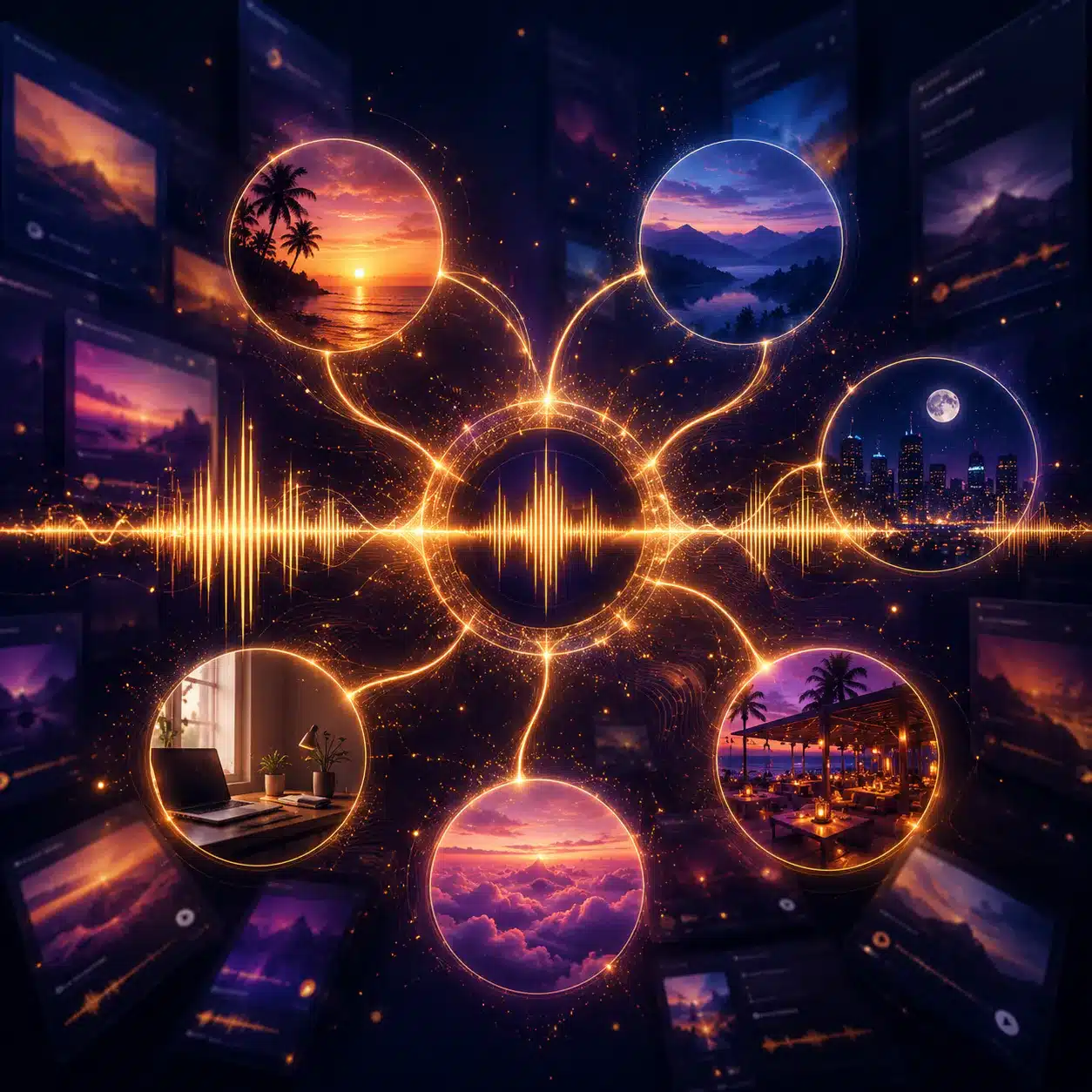
Mood-based listening means choosing music according to a feeling, activity, moment or atmosphere rather than a strict genre label. Instead of searching only for “house music” or “techno”, listeners now often look for “sunset house”, “late-night drive music”, “deep focus electronic music”, “summer beach vibes” or “emotional club music”.
This does not mean genres are disappearing. Genres still matter for artists, DJs, producers and music platforms. But for many listeners, the first question is no longer always “what genre is this?” It is “how does this make me feel?”
That shift explains why mood-based listening has become so important in electronic music. Electronic sound is naturally flexible. It can create energy, focus, escape, intimacy, nostalgia, luxury, movement or calm within seconds. A groove, a bassline, a pad, a vocal texture or a simple melody can instantly define the emotional color of a moment.
In that sense, electronic music is perfectly built for the age of vibes. It does not only describe a style. It creates an atmosphere.
What is mood-based listening?
Mood-based listening is the habit of choosing music based on an emotional state, activity or setting. A listener might choose music to concentrate, train, travel, relax, dance, remember, escape or create a certain atmosphere around daily life.
In streaming culture, this has become normal. Playlists are often built around moods and moments: focus, chill, motivation, romance, sunset, party, sleep, driving, workout, beach club, late night or nostalgia. The listener does not always care whether a track belongs precisely to deep house, organic house, melodic techno or downtempo. They care about whether the track matches the moment.
This is why mood-based listening is so powerful. It reflects how people actually use music in their lives. Music is not only entertainment. It is emotional architecture. It can change the feeling of a room, a walk, a trip, a night, a memory or a personal routine.
Why vibes are replacing genres
For decades, music discovery was organized mainly around genre. People looked for rock, pop, hip-hop, house, techno, trance, jazz or classical. Those categories still exist, but modern listening behavior has become more fluid.
Many listeners now move between genres without thinking too much about labels. A playlist might include deep house, afro house, melodic techno, indie dance, ambient electronic music and soft pop textures if they all share the same emotional atmosphere. The mood becomes the connection.
This is especially true for electronic music, where the borders between styles are often porous. A track can have a house groove, melodic techno tension, Balearic warmth, ambient textures and a pop-inspired vocal fragment. A strict genre label may not fully explain what the listener is experiencing.
That is why “vibes” have become such a useful language. A vibe is not always technically precise, but it is emotionally clear. It tells the listener what kind of world they are entering.
Electronic music is built for atmosphere
Electronic music works so well with mood-based listening because it can create atmosphere very quickly. The sound palette is almost unlimited. Producers can shape rhythm, space, texture, harmony and emotion with extreme precision.
A kick drum can create movement. A bassline can create depth. A soft pad can create distance. A plucked melody can create intimacy. A vocal chop can create identity. A reverb tail can create memory. A simple filtered loop can turn into a hypnotic emotional environment.
This is one of the reasons electronic music can move so easily between club culture and everyday life. The same track can work in a DJ set, a travel video, a sunset playlist, a focus session or a late-night headphone moment, depending on how the listener receives it.
This also connects with the emotional side of club music. Rhythm gives electronic music its physical power, but melody and atmosphere often give it long-term emotional meaning.
Streaming changed the way listeners search for music
Streaming platforms changed music discovery by making almost every song instantly available. But abundance also created a new problem: listeners need easier ways to find the right sound for the right moment.
This is where moods became useful. Instead of browsing only by artist or genre, listeners can search by activity or emotion. They can find music for studying, relaxing, working, running, cooking, sleeping, traveling or dreaming. Mood-based listening helps reduce choice overload by turning music into a companion for specific moments.
Deezer’s Flow Moods project is a clear example of this evolution. The system was designed to recommend personalized music by mood, using collaborative filtering, audio analysis and mood annotations from professional curators. According to the researchers, this helped Deezer serve mood-specific playlists to millions of users every day.
That matters because it shows that mood-based listening is not just a social media phrase. It is also a real direction in music recommendation, platform design and everyday listening behavior.
From playlists to personal soundtracks
Modern listeners often use music as a personal soundtrack. A morning playlist can create energy. A deep house mix can turn a work session into something smoother. A sunset playlist can make a simple walk feel cinematic. A late-night electronic track can make a memory feel more intense.
This is why mood-based listening is connected to identity. People do not only listen to music. They use it to shape how a moment feels and sometimes how they want to see themselves inside that moment.
This idea is very close to the article Why Electronic Music Became the Soundtrack of Modern Life. Electronic music has moved beyond clubs because it now follows people through their daily routines, screens, travels, workouts, personal rituals and emotional states.
In this context, playlists are not just collections of tracks. They are small emotional worlds. A good playlist does not only group music together. It creates a feeling that the listener can enter and return to.
The problem with generic mood playlists
There is also a risk. As mood-based listening becomes more popular, some playlists can become too generic, too automated or too passive. They may sound smooth, but not memorable. They may fit the background, but fail to create a real emotional connection.
This is where human curation still matters. A strong mood playlist should not only be functional. It should feel intentional. It should understand contrast, progression, tension, release and emotional storytelling.
For example, a sunset house playlist should not only contain tracks with warm sounds. It should move like an evening: opening gently, building light, creating movement, reaching a moment of emotional glow, then fading into something more intimate. A late-night electronic playlist should not only be dark. It should have depth, space and rhythm.
The best mood-based listening experiences are not random. They are curated. They understand that a vibe is not a label — it is a journey.
Why this matters for electronic artists
For electronic artists, mood-based listening changes how music can be presented. It is no longer enough to say, “I make house music.” That may be true, but it may not explain the emotional world of the project.
A stronger description might be: “I create warm, emotional electronic music for sunset moments, late-night memories and deep club atmospheres.” That kind of positioning helps listeners understand not only the genre, but the feeling.
This matters for SEO, playlists, social media, release pages and artist identity. People often discover music through context. If a track feels like travel, warmth, memory, focus, club energy or Mediterranean escape, that emotional context should be part of the way the music is described.
Independent artists especially can benefit from this. Without a major label narrative, they can build their own emotional language through titles, visuals, blog articles, playlists, release descriptions and consistent internal linking.
How Silvano Dio connects with mood-based listening
Silvano Dio’s music naturally connects with mood-based listening because many releases are built around atmosphere, memory, movement and emotional color rather than one narrow genre identity.
A Trip in Malta connects with travel-inspired electronic music, Mediterranean atmosphere and the feeling of escape. It is not only a track title; it suggests a place, a mood and a journey.
Sax On The Beach (Ibiza Beach 2025 Remix) fits naturally with sunset house, beach club energy and warm summer listening. It belongs to the kind of musical world where atmosphere matters as much as rhythm.
Take My Hand brings a warmer and more escapist emotional direction, while Forever connects with memory, melancholy and intimate electronic feeling.
Miss You adds another shade: a late-night, hypnotic house atmosphere where emotion and club movement exist together.
These releases show why mood-based listening is so relevant to the Silvano Dio universe. The tracks can be organized not only by style, but by feeling: travel, sunset, memory, intimacy, movement, escape and emotional club energy.
The link with Only Good Vibes and playlist culture
Mood-based listening also connects naturally with playlist culture. A project like Only Good Vibes can become more than a playlist name. It can become a curated emotional ecosystem: house vibes, sunset vibes, funky vibes, deep vibes, summer vibes, afro house vibes and late-night electronic moods.
This is valuable because modern listeners often enter music through playlists before they explore an artist catalog. A playlist can introduce a mood, and then a release page or blog article can deepen the story.
That creates a stronger content loop. A listener discovers a vibe through a playlist, finds a track, clicks through to the artist, reads the story behind the sound, and then enters the broader musical universe. This is exactly where SEO, playlists and artist branding can work together.
Why mood-based listening supports SEO and GEO
From an SEO and GEO perspective, mood-based listening is useful because it matches how people search. Users often ask natural questions like: “What is sunset house?”, “What music should I listen to while working?”, “Why is electronic music good for focus?”, “What are the best vibes for summer playlists?” or “What makes music feel emotional?”
These are not always strict genre searches. They are intent-based searches. They reveal what the listener wants to feel or do.
For AI-powered search, this kind of content is also useful because it answers concepts clearly. A strong article should define the term, explain why it matters, give examples, connect it to real listening behavior and offer practical context. That is why a topic like mood-based listening can work well for both readers and search engines.
The key is to avoid writing only for ranking. The content has to genuinely help the reader understand a cultural shift: music is increasingly discovered through moods, moments and emotional needs.
Genres still matter — but they need emotional context
It would be wrong to say that genres are dead. Genres still help producers, DJs, journalists, curators and listeners communicate. They give structure to music culture and help people find related sounds.
But genres are no longer always enough. “House music” can mean many things: soulful, deep, progressive, afro, funky, techy, vocal, emotional, minimal, organic or festival-oriented. Without emotional context, the genre label can feel incomplete.
That is why the strongest modern music descriptions often combine genre and mood. Instead of simply saying “deep house”, an artist can say “warm deep house for sunset and late-night listening.” Instead of only saying “melodic house”, they can say “emotional melodic house with cinematic atmosphere.”
This combination is clearer for humans, stronger for playlists and more useful for search.
The future of listening is emotional
Mood-based listening shows that the future of music discovery is not only technical. It is emotional. Algorithms may recommend tracks, but listeners still decide based on how music fits their lives.
Electronic music is especially strong in this future because it can create complete atmospheres. It can be energetic without being aggressive, emotional without being slow, cinematic without being overdramatic, and functional without becoming empty.
For artists like Silvano Dio, this creates an opportunity to build a musical identity around feeling, not just classification. The goal is not only to be found under a genre. The goal is to be remembered for a mood, a world and an emotional signature.
Conclusion
Mood-based listening is changing how people discover and understand electronic music. Genres still matter, but vibes increasingly shape the first connection between a listener and a track.
This shift makes sense. People use music to move, focus, travel, remember, relax, dance and escape. They choose soundtracks for moments, not only categories. Electronic music fits this behavior perfectly because it can create atmosphere, rhythm and emotion with incredible flexibility.
For Silvano Dio, mood-based listening is not just a trend. It is a natural way to understand the music: warm, emotional, atmospheric and built for moments that feel bigger than ordinary listening. In a world of endless tracks, the strongest music is not always the easiest to label. It is the music that creates a feeling people want to return to.
FAQ: Mood-Based Listening and Electronic Music
What is mood-based listening?
Mood-based listening means choosing music based on a feeling, activity, moment or atmosphere rather than a strict genre. For example, listeners may search for sunset house, focus music, late-night vibes or emotional electronic music instead of only searching for house or techno.
Why are vibes becoming more important than genres?
Vibes are becoming more important because many listeners now use music to shape daily moments, emotions and activities. Genres still matter, but mood-based descriptions often explain more clearly how a track or playlist feels.
Why does electronic music work well for mood-based playlists?
Electronic music works well for mood-based playlists because it can create atmosphere quickly through rhythm, bass, melody, pads, vocal textures and sound design. This makes it ideal for focus, travel, sunset, club, relaxation and late-night listening.
Are genre labels still useful in music?
Yes. Genre labels are still useful for artists, DJs, platforms and listeners. However, they often work best when combined with emotional context, such as warm deep house, sunset house, emotional club music or cinematic electronic music.
Which Silvano Dio tracks fit mood-based listening?
Released tracks such as A Trip in Malta, Sax On The Beach (Ibiza Beach 2025 Remix), Take My Hand, Forever and Miss You all connect with mood-based listening through travel, sunset, memory, intimacy, warmth and emotional club atmosphere.
Discover more from Silvano Dio
Subscribe to get the latest posts sent to your email.