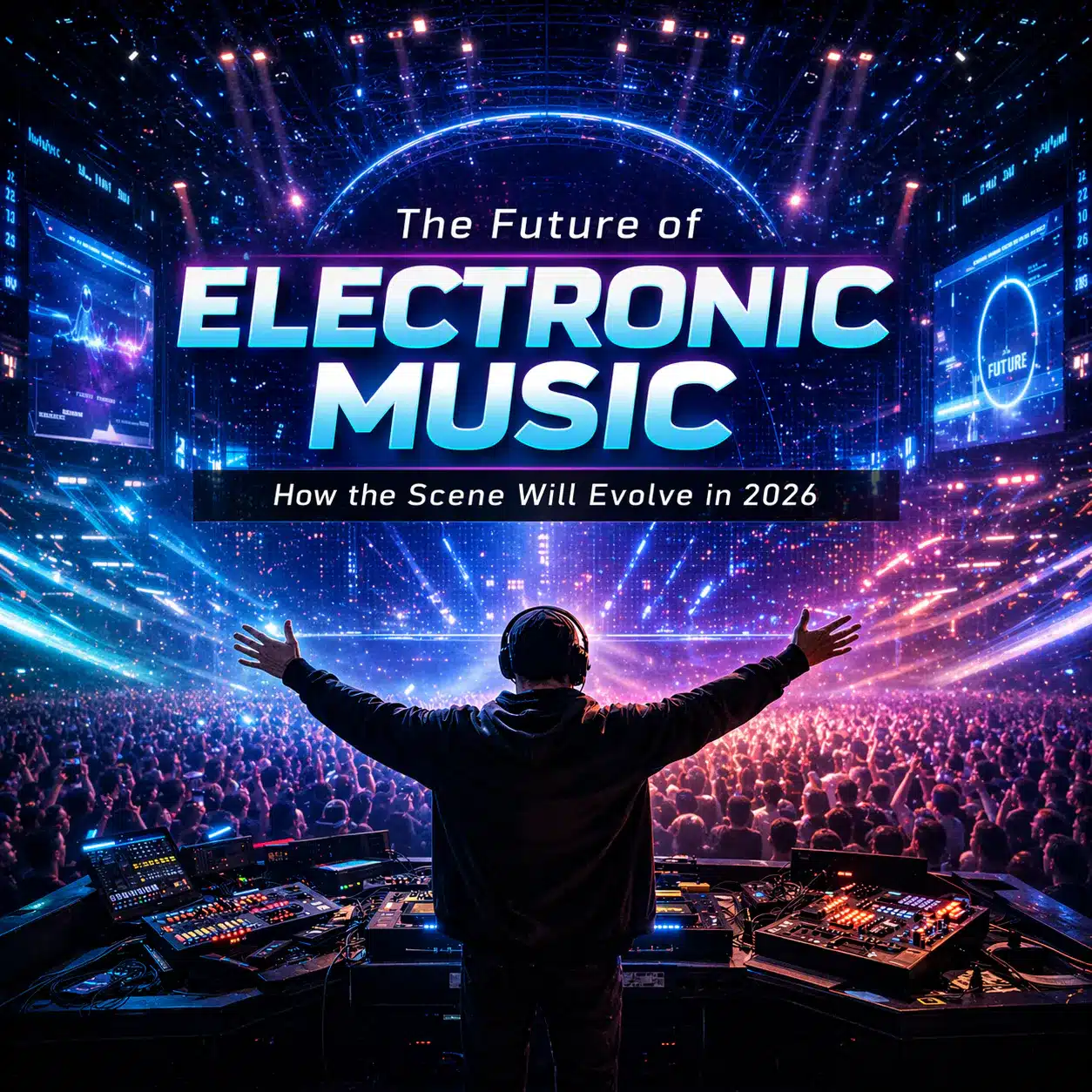
The future of electronic music in 2026 is moving toward deeper identity, stronger underground influence and more immersive experiences. After years shaped by short-form content, algorithmic releases and viral trends, the scene is reconnecting with atmosphere, performance, community and artistic direction.
From AI-assisted production to hybrid live shows, independent labels, fan-owned communities and more intentional sound design, electronic music is entering a more mature phase. The next wave will not only be about faster tools or louder drops — it will be about emotion, connection and long-term creative identity.
What Is the Future of Electronic Music?
The future of electronic music is moving toward more immersive live experiences, stronger underground influence, smarter use of AI-assisted production, deeper fan communities and more intentional artistic identity. In 2026, the scene is not only becoming more technological, but also more emotional, independent and performance-driven.
A Rawer and More Intentional Electronic Sound
One of the most visible changes in electronic music is the gradual rejection of overly short, formula-based tracks. In 2026, longer arrangements, hypnotic progressions, and evolving structures are reclaiming their place.
Producers are prioritizing groove, atmosphere, and tension over instant gratification. BPMs may increase, especially in techno and rave-influenced styles, but production choices are becoming more refined and deliberate.
This shift reflects a broader return to electronic music as a dancefloor-first experience, designed for immersion rather than algorithmic performance.
AI in Electronic Music: Powerful but Invisible
Artificial intelligence will play an important role in the future of electronic music — but quietly. By 2026, audiences are no longer impressed by tracks that sound fully AI-generated.
Instead, AI is being integrated as a creative assistant:
- Advanced sound design and texture creation
- Harmonic and rhythmic idea generation
- Faster iteration without sacrificing artistic control
Producers who treat AI as a creative tool — not a replacement — are the ones shaping the next generation of electronic music.
Live Performance Becomes Central Again
Live electronic performance is rapidly becoming a standard rather than an exception. Hybrid setups combining DJ techniques, hardware instruments, and modular systems are increasingly common.
Artists like Anyma, Stephan Bodzin, and Ninajirachi have shown that audiences want more than playback — they want presence, visuals, and uniqueness.
In 2026, electronic music performances are expected to be experiences, not repetitions.
The Underground Shapes the Mainstream
While large festivals remain influential, the creative direction of electronic music is increasingly driven by underground scenes. Local collectives, independent labels, and smaller club environments are once again defining new sounds.
These spaces allow artists to experiment freely, without the pressure of mass-market expectations. As a result, the underground continues to influence the mainstream — not the other way around.
The future of electronic music is being built from the ground up.
From Streaming Metrics to Real Fan Communities
Streaming platforms remain essential, but their role is changing. Artists are now focusing less on playlist placement and more on building direct relationships with their audience.
Bandcamp releases, newsletters, Discord communities, and artist-owned websites are gaining importance. In 2026, a smaller but engaged fanbase is more valuable than passive streaming numbers.
Electronic music is moving toward connection, loyalty, and long-term culture.
A More Mature Electronic Music Era
The future of electronic music is not about one single technology or one dominant trend. It is about a deeper return to identity, atmosphere, performance and connection.
In that sense, 2026 does not feel like a break from electronic music’s roots. It feels like a more mature continuation of them — where artists, communities and experiences matter more than pure visibility.
If you enjoy exploring how sound, culture and emotion intersect, you can read more on the Silvano Dio music blog, including pieces on AI tools for music producers and the story behind A Trip in Malta.
You can also explore Silvano Dio’s catalog on Beatport.
Key Electronic Music Trends to Watch in 2026
- AI as a creative assistant: producers will use AI for ideas, textures and workflow, not as a replacement for taste.
- More immersive live performances: hybrid sets, visuals and hardware-driven shows will become more important.
- Underground scenes shaping the mainstream: local collectives and independent labels will continue to influence the wider sound.
- Longer, deeper arrangements: electronic music will move back toward groove, tension and progression.
- Direct fan communities: artists will rely more on newsletters, websites, Bandcamp, Discord and owned audiences.
FAQ: The Future of Electronic Music in 2026
What is the future of electronic music?
The future of electronic music points toward AI-assisted production, immersive live shows, stronger underground scenes, direct fan communities and more emotionally driven sound design.
What are the biggest electronic music trends in 2026?
The biggest electronic music trends in 2026 include AI-supported workflows, hybrid live performances, genre fusion, underground club influence, longer arrangements and stronger artist-owned communities.
Will electronic music become more AI-generated?
AI will become more present in electronic music production, but the strongest artists will use it as a creative assistant rather than a replacement for human taste, emotion and identity.
Will AI replace electronic music producers?
No. AI is becoming a useful support tool for sound design, idea generation and workflow acceleration, but artistic identity, taste and emotional direction still come from the producer.
Why is live electronic performance becoming more important?
Audiences increasingly want unique and memorable experiences. Hybrid live sets, hardware performances and stronger visual storytelling help electronic artists stand out beyond standard playback-based DJ performances.
Is underground electronic music still shaping the mainstream?
Yes. Independent labels, local collectives and club scenes continue to influence the wider electronic music landscape by pushing new sounds, aesthetics and cultural directions before they reach larger audiences.
Where can I explore more electronic music articles?
You can discover more trends, artist stories and production-focused articles on the Silvano Dio music blog.
Discover more from Silvano Dio
Subscribe to get the latest posts sent to your email.