Afro House and Amapiano are two of the most distinctive sounds in contemporary electronic music. Both are deeply connected to South African musical culture, both place rhythm at the centre of the listening experience, and both have reached audiences far beyond their original scenes.
Yet they are not the same genre.
Afro House often creates movement through layered percussion, warm basslines, atmospheric melodies and an evolving sense of tension. Amapiano tends to bring a different rhythmic personality, with spacious grooves, expressive bass patterns, soulful keys and its instantly recognizable log drum sound.
The distinction matters because each genre has its own history, community and musical identity. Understanding those differences also makes it easier to appreciate the creative connections between them.
As a House music producer drawn to emotional melodies and hypnotic rhythms, I find that relationship particularly interesting. It shows how electronic music can develop new possibilities without every influence needing to become the same sound.
Afro House vs Amapiano: The Main Difference
The simplest way to understand the difference between Afro House and Amapiano is to listen to how each style uses rhythm, bass and space.
Afro House often develops a continuous, rolling groove through percussion, kick drums, basslines and atmospheric arrangements. Its emotional character can be deep, soulful, hypnotic or uplifting.
Amapiano frequently creates a more spacious and playful rhythmic conversation. Piano chords, shakers, bass movement and pitched log drum patterns give the music its characteristic personality.
These descriptions are useful starting points rather than strict rules. Both genres contain several musical directions, and individual productions can blur the boundaries.
- Rhythm: Afro House often emphasizes layered percussion, while Amapiano frequently features shuffling patterns and expressive bass rhythms.
- Bass: Afro House commonly uses deep, rolling basslines. Amapiano is strongly associated with the pitched, percussive log drum.
- Melody: Both styles can be soulful and melodic, but Amapiano often places particular emphasis on piano and keyboard textures.
- Atmosphere: Afro House can feel driving, cinematic or meditative. Amapiano frequently explores a spacious, relaxed or playful groove.
- Tempo: Amapiano is often slower, although tempo ranges overlap and neither genre is defined by a single BPM.
Where Does Afro House Come From?
Afro House has strong roots in South Africa’s House music culture, developing through connections with kwaito, deep house, soulful house and regional rhythmic traditions.
Over time, its musical identity expanded. Producers and DJs from different African countries and international scenes contributed their own interpretations, introducing new percussion, vocal approaches and atmospheric textures.
Today, Afro House is a broad musical family rather than one fixed production formula.
Some tracks are deeply soulful and vocal-driven. Others emphasize darker electronic textures, powerful percussion or long hypnotic arrangements. The genre can be intimate and emotional or designed for large dancefloors.
A particularly interesting perspective comes from Beatportal’s conversations with Afro House artists, which explore the genre’s cultural roots, musical evolution and the importance of recognizing its pioneers.
That cultural context is essential. Afro House is more than adding percussion to an electronic track. Its identity comes from a rich history of musicians, DJs, communities and evolving musical traditions.
For a broader look at its international development, explore my article on why Afro House has become such an influential electronic music sound.
What Is Amapiano, and Where Did It Begin?
Amapiano emerged in South Africa during the 2010s, growing through local music communities and township scenes, particularly around Gauteng.
The name is commonly associated with the piano-driven character of the music. But its identity reaches far beyond a keyboard sound.
Amapiano combines elements of South African house music, kwaito, jazz-influenced harmony, deep bass, percussion and distinctive rhythmic experimentation.
One of its most recognizable elements is the log drum.
This pitched, percussive bass sound can move between notes, answer the drums and create melodic rhythms of its own. Instead of simply supporting the groove, the bass can become an active musical voice.
Shakers, piano chords and deliberately spacious arrangements leave room for that movement to breathe.
Amapiano has also developed a wider culture around dancing, fashion, nightlife, vocals and collective musical expression. It should not be reduced to one production technique.
Its distinct identity received further recognition when Beatport introduced a dedicated Amapiano genre in 2022, separating it from broader categories such as Afro House and Deep House.
Why the Log Drum Makes Such a Difference
In many forms of electronic music, the bassline provides weight and harmonic movement while the percussion creates the rhythmic details.
Amapiano often challenges that separation.
The log drum can function as bass, percussion and melodic movement at the same time. Its patterns can move around the kick, creating a recognizable conversation between low frequencies and rhythmic accents.
This is one reason Amapiano can feel remarkably dynamic even when the arrangement is relatively minimal.
A small bass variation can completely change the energy of a phrase. A moment of silence can make the next rhythmic accent more powerful. A repeating pattern can become increasingly hypnotic as other elements enter and leave.
Not every Amapiano track uses the same log drum approach, but the instrument remains one of the clearest ways to recognize the style.
How Afro House Creates Emotional Atmosphere
One of the qualities that attracts me to Afro House is the relationship between rhythm and emotion.
A production can be built around a strong percussion groove while leaving enough space for melodic textures, vocals and atmospheric elements to develop naturally.
That balance creates several possibilities.
A warm chord progression can make the same rhythm feel intimate. A distant vocal can introduce nostalgia. A subtle melodic movement can turn an otherwise repetitive groove into something emotionally meaningful.
The arrangement does not need to become overly complicated. Sometimes a few carefully chosen musical elements are enough to create a complete atmosphere.
That approach connects with a wider idea in House music: the dancefloor and emotional storytelling do not have to exist separately.
Rhythm can make people move while melody gives them a reason to remember the track.
Where Afro House and Amapiano Meet
The most interesting relationship between Afro House and Amapiano is not necessarily about deciding which style a track belongs to.
It is about understanding how their musical ideas can interact.
An Afro House production might borrow some of Amapiano’s rhythmic spaciousness or introduce subtle log drum-inspired bass movement. An Amapiano production might incorporate stronger atmospheric development or percussion textures that listeners also associate with Afro House.
These connections can feel natural because both styles value groove, repetition, rhythmic dialogue and musical identity.
However, crossing musical influences requires care. An isolated percussion sample does not automatically turn a track into Afro House, just as adding a log drum does not automatically make a production Amapiano.
The complete arrangement, musical language and cultural context still matter.
Queen Of My Castle: A Personal Connection Between Rhythm and Emotion
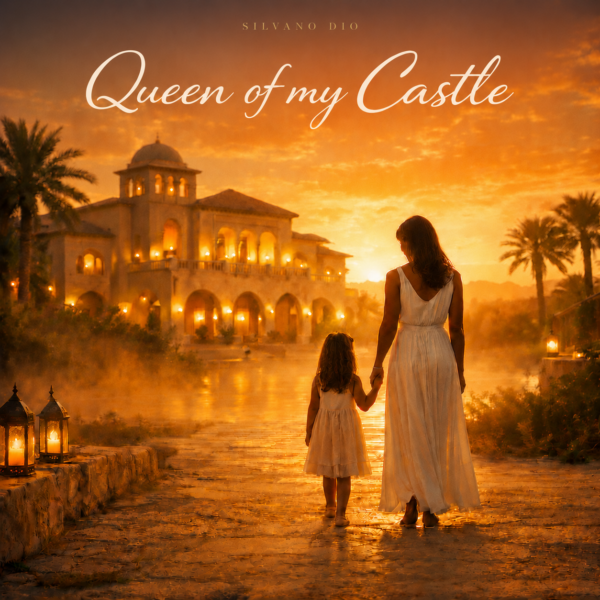
My single Queen Of My Castle, released on September 4, 2026, offers a personal example of how these musical worlds can connect.
The track is rooted in emotional Afro House, combining warm percussion, melodic textures and subtle Amapiano influences with a story about love, family and belonging.
For me, the important element is not simply the combination of musical styles. It is what that combination allows the music to express.
The rhythmic foundation brings movement and warmth. The melodic atmosphere gives the production its emotional direction. Together, they create a space where a personal story can live inside a dance-oriented arrangement.
That is the balance I find most rewarding in electronic music.
A track can carry a feeling that matters deeply to its creator while still being something other people can experience in completely different ways: during a drive, at sunset, through headphones or on a dancefloor.
Queen Of My Castle represents that idea particularly well within my musical universe. The rhythm provides the energy, but the meaning behind the music gives it another dimension.
Why Cultural Identity Matters When Genres Become Global
As Afro House and Amapiano reach more international audiences, it becomes increasingly important to recognize the artists, producers and communities responsible for developing these styles.
Musical influence has always been part of electronic music. House itself developed through exchanges between different communities, cities, technologies and musical traditions.
But influence should not erase origin.
For producers exploring musical directions outside their own background, curiosity should come with listening, research, respect and proper recognition of the people who shaped the sound.
It also means accepting that genre labels carry cultural meaning.
Amapiano is not simply a slower version of Afro House. Afro House is not just a general label for any House track containing African-inspired percussion.
Each has its own story, even when the boundaries are flexible.
What These Two Styles Reveal About the Future of House Music
The relationship between Afro House and Amapiano reflects something larger happening across electronic music.
Genres are becoming more connected, but their individual identities remain valuable.
Producers are exploring new combinations of bass movement, organic percussion, atmospheric melodies, vocals and rhythmic structures. Listeners are becoming more comfortable moving between different musical worlds.
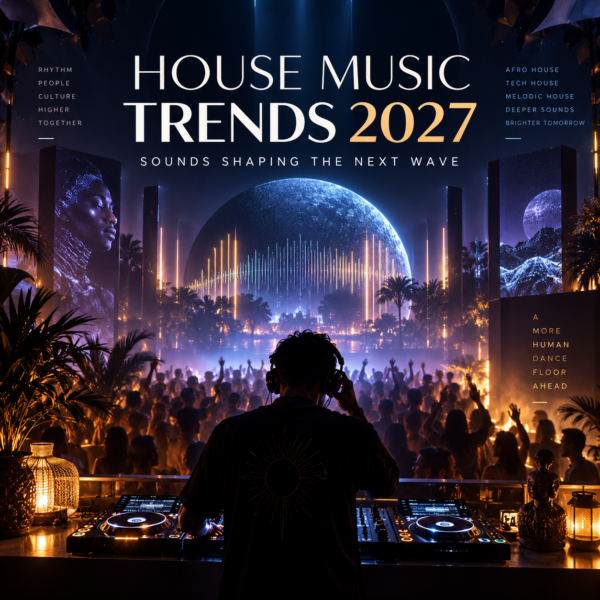
As explored in my article about House music trends heading into 2027, the future may be shaped less by one dominant formula and more by creative connections between established styles.
What matters to me is that those connections continue to create music with personality.
There is little value in mixing influences simply because a particular sound is fashionable. The result becomes more interesting when every musical decision contributes to the groove, atmosphere or emotion of the track.
Conclusion: Different Rhythms, Shared Musical Possibilities
Afro House and Amapiano share important musical connections, but each deserves to be understood on its own terms.
Afro House offers a broad world of rhythmic depth, soulful expression and atmospheric electronic music. Amapiano brings a distinctive musical language built around spacious grooves, piano textures, expressive bass movement and South African cultural identity.
Their differences make both styles more interesting, not less compatible.
For me, the greatest creative potential appears when influences meet with intention. Rhythm should have its own character. Melody should create a feeling. And the music should ultimately communicate something beyond its genre label.
Because whether a track is Afro House, Amapiano or a carefully considered meeting of different musical influences, the connection that lasts is often the simplest one: the moment when a rhythm makes you move and a feeling makes you stay.
FAQ: Afro House vs Amapiano
What is the main difference between Afro House and Amapiano?
Afro House often emphasizes layered percussion, deep grooves and atmospheric development. Amapiano is particularly associated with piano textures, spacious rhythms, shuffling percussion and expressive log drum bass patterns. Both styles are diverse and share musical influences.
Is Amapiano a type of Afro House?
Amapiano and Afro House are closely connected through South African House music culture, but Amapiano has developed its own distinct musical and cultural identity. It is generally recognized as a separate genre, although some productions combine elements of both.
What is a log drum in Amapiano?
A log drum is a pitched, percussive bass sound strongly associated with Amapiano. Its rhythmic patterns often move around the kick drum, combining bass movement, percussion and melodic expression.
Is Afro House faster than Amapiano?
Afro House is often played at a somewhat faster tempo than Amapiano, but there is no strict BPM boundary. Different substyles overlap, and tempo alone cannot reliably identify either genre.
Can Afro House include Amapiano influences?
Yes. Some Afro House productions incorporate Amapiano-inspired bass movement, rhythmic space or percussion patterns. These influences can complement the Afro House foundation without necessarily changing the track’s primary musical identity.
Is Queen Of My Castle Afro House or Amapiano?
Queen Of My Castle by Silvano Dio is primarily an emotional Afro House track with subtle Amapiano influences. Released on September 4, 2026, it combines warm percussion, melodic atmosphere and a personal story about love, family and belonging.
Discover more from Silvano Dio
Subscribe to get the latest posts sent to your email.